Couture for everyone.
Couture Robotics teaches general-purpose robots to sew. Arms, dual arms and humanoids that lay, align, stitch and fold with atelier precision, at factory scale.
Opening a small number of pilot lines with garment manufacturers, factory operators and brands.
The maths of making clothes abroad just broke.
Tariffs on apparel doubled in 2025 and have swung ever since. A supply chain nobody can predict is a reason to build closer to the customer, and robots are finally cheap and capable enough to do it.
Effective US tariff on apparel imports1
Duty collected as a share of import value
Show the data
| Month | Effective tariff |
|---|---|
| Jan 2025 | 16% |
| Mar 2025 | 17% |
| May 2025 | 24% |
| Oct 2025 | 34% |
| Jan 2026 | 34% |
| Jun 2026 | 23% |
of clothing bought in the United States is imported.
for a six-axis collaborative arm, down from six figures a decade ago.
of a living wage is what garment workers in the main producing countries earn, on average.
- Texas Tech University / ICAC analysis of US Census calculated duty on apparel imports. USAFacts reports the same trend, with apparel at 14.9% for 2024 and about 33% in January 2026.
- American Apparel & Footwear Association.
- Representative list price for a 5 kg payload six-axis collaborative arm, such as the UFactory xArm 6. Integration and tooling are extra.
- The Industry We Want, wage-gap analysis across 13 garment- and footwear-producing countries.
Couture, literally.
coutureFrench, noun
sewing; the making of garments. Only later, the ateliers of Paris.
Before it meant a runway, couture meant the work itself: a needle, a seam, a person who knows the cloth. Somewhere between the atelier and the container ship, that work became the cheapest and most hidden labour in the world.
We are building robots that do the stitching, so the skill around it can be paid for again. Our aim is atelier quality at mass-market prices, close to the people who wear it. Once a machine can sew anything, made-to-measure stops being a luxury. That is what we mean by couture for everyone.
We start with the stitch, the step that takes the most hands, and build out to the whole line.
- 1911
Triangle Shirtwaist fire, New York. 146 garment workers die behind locked doors.
- 1938
Minimum wage and overtime become US law, pushed through largely by garment unions.
- 2013
Rana Plaza collapse, Dhaka. 1,134 people killed. Brands sign a binding safety accord.
- Next
Safe floors, paid skill, and a label that can say who made the garment. The consensus is a century old. We want to help meet it.
Robots stitch, people decide
Teaching, overseeing, finishing and fitting stay with experienced operators.
No pilot without a workforce plan
Every floor we automate funds training for the people already on it.
Every garment can say who made it
Machine logs make traceability the default rather than an audit.
How a robot learns to sew.
Cloth stretches, slips and never lands the same way twice, which is why apparel is the last big industry automation never reached. We solve it the way people learn it: by watching skilled hands, then practising.
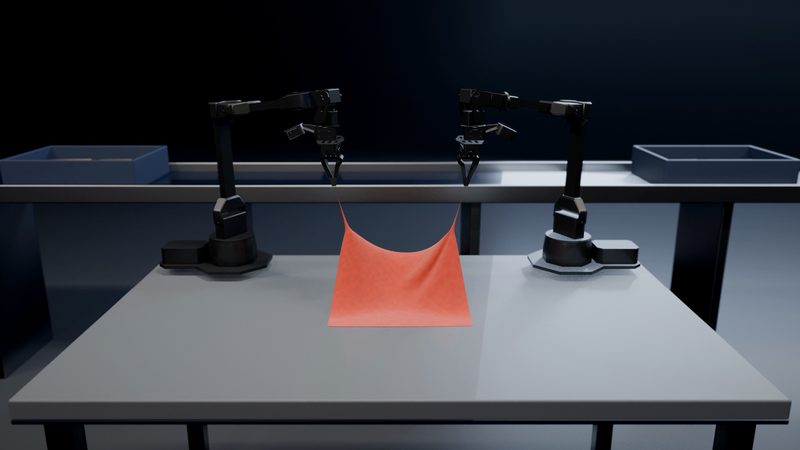
Teach
On live garment floorsSkilled operators demonstrate real production by teleoperation. Every shift becomes training data.
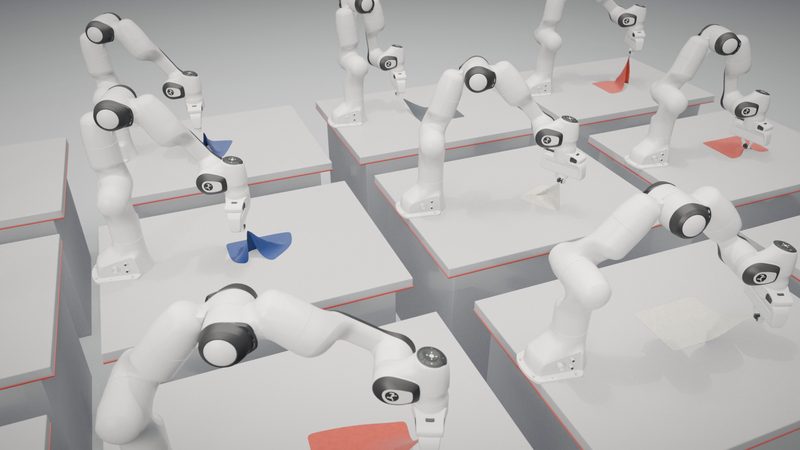
Learn
In simulationWe train manipulation models on those demonstrations and rehearse thousands of fabrics a day in simulation.
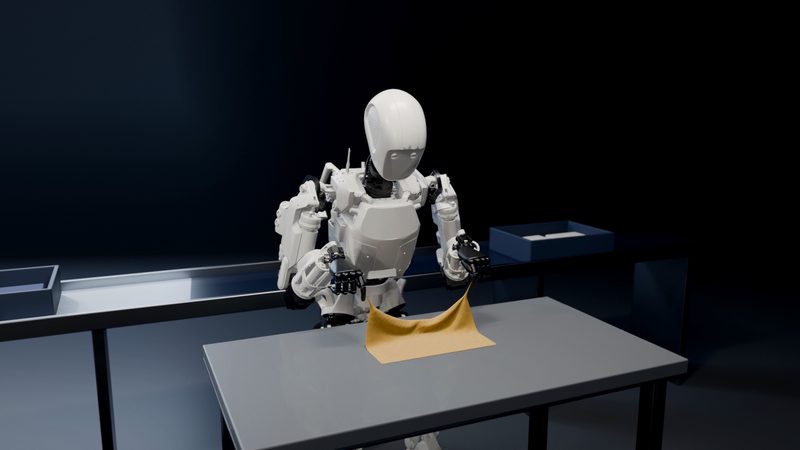
Run
On whatever hardware fitsCobot arms for a seam, dual-arm systems for handling, humanoids where the floor was built for people.
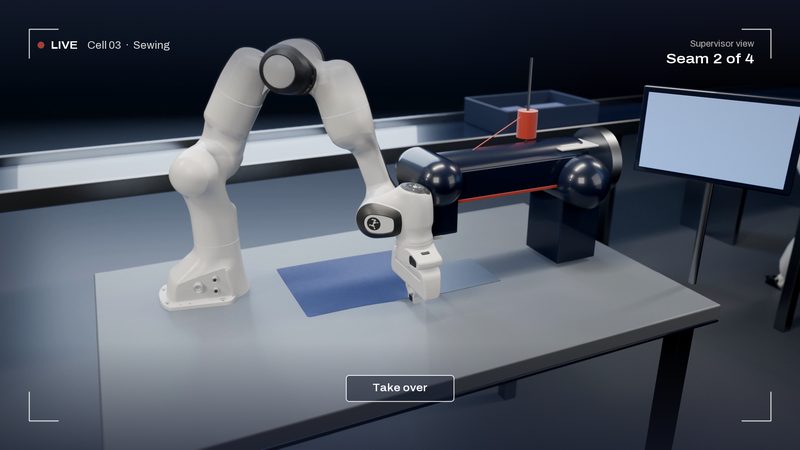
Oversee
From anywhereRemote operators watch many machines at once and step in when the cloth misbehaves.
Every correction an operator makes goes back into training, so the system gets better with use.
Request a pilot line.
- Manufacturers abroadOpen a plant inside the tariff wall, near your buyers, with a fraction of the headcount.
- Local operatorsStart or scale a factory without competing for sewing labour that no longer exists.
- BrandsNearshore capacity in weeks, smaller runs and traceability you can print on the label.
Tell us what you make and roughly how much. It shapes which garments we train on first, and we will be in touch as pilot slots open. Prefer email? hello@couturerobotics.com
See it sew, in simulation.
Real robot models and real cloth physics: a Franka arm feeds a denim panel through the sewing head while the seam goes in. Watch the full line in the film, and leave your email for the interactive demo.